
When you hear a modern Afro-pop track with a driving bassline, layered guitars, and a rhythm that feels both ancient and electric, you’re hearing the legacy of the 1970s. That was the decade when African musicians didn’t just borrow from global sounds-they reshaped them. They took American funk, soul, and jazz, mixed them with Yoruba drums, Congolese rumba, and Zulu harmonies, and created something entirely new. This wasn’t just music. It was resistance. It was identity. And it changed the world’s sound forever.
The Rise of Afrobeat and Fela Kuti’s Revolution
Fela Anikulapo Kuti didn’t just play music-he declared war with it. After returning from Los Angeles in 1969, where he met Black Panther activists and heard James Brown’s “Say It Loud-I’m Black and I’m Proud”, Fela began building a new sound in Lagos. He combined the polyrhythms of Yoruba percussion with the electric basslines of funk, the horn sections of jazz, and the extended improvisation of psychedelic rock. The result? Afrobeat.
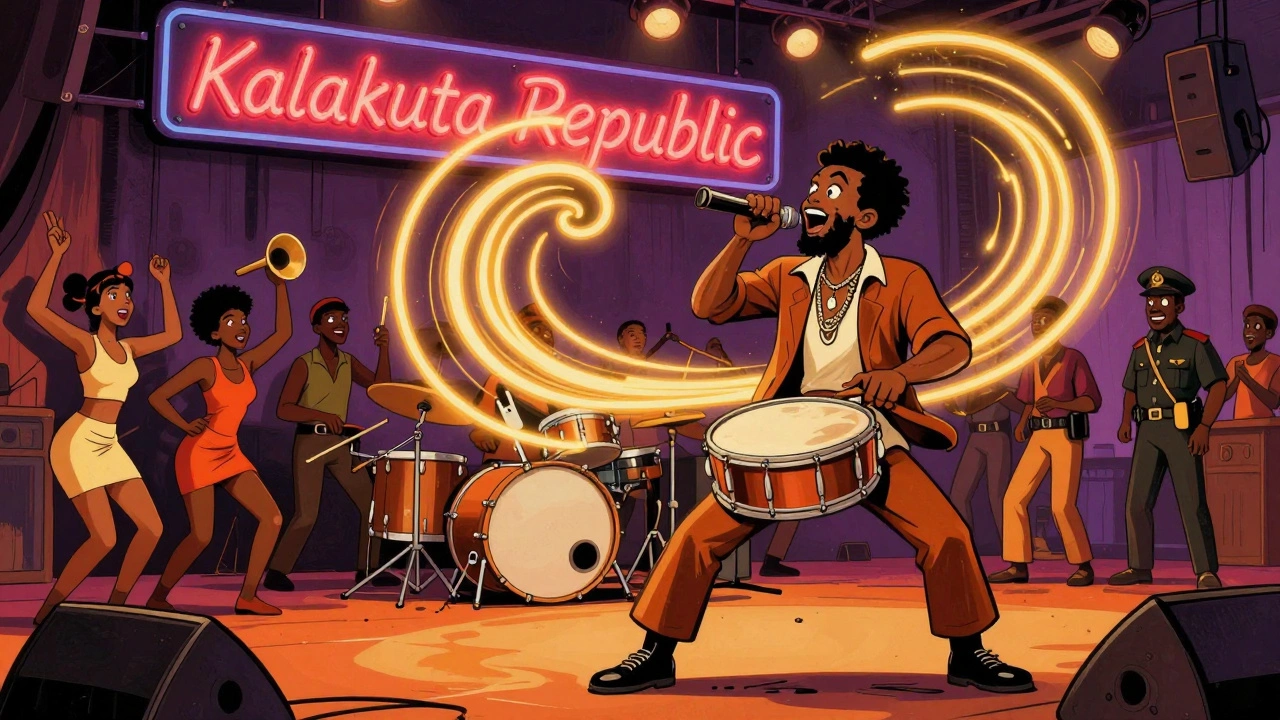
His band, Nigeria’s 15-piece Africa 70, didn’t just perform-they held court. At the Kalakuta Republic, his compound-turned-club, crowds of 500 to 800 people packed in every night. Police and soldiers came too, some to arrest him, others just to dance. His songs weren’t three-minute pop tunes. They were 10- to 15-minute sonic battles. Tracks like “Zombie” and “Sorrow Tears and Blood” mocked military rule and exposed corruption. The Nigerian government banned “Sorrow Tears and Blood” the day it was released. But that didn’t stop it from spreading. Copies were passed hand to hand through Ojuelegba market stalls. By 1977, Fela had sold over 100,000 copies of “Gentleman” alone, earning him roughly $525 in royalties-meager by Western standards, but massive in a country where most musicians made less than $10 per month.
From Cameroon to Congo: The Global Ripple
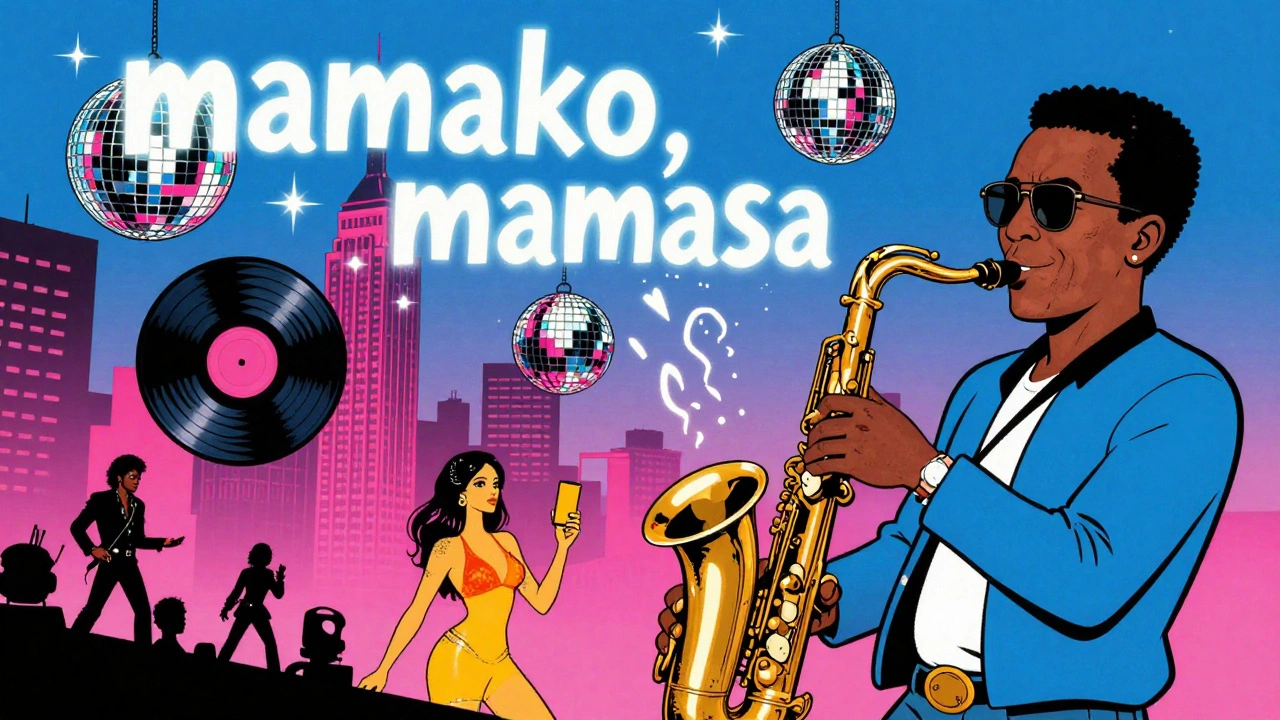
While Fela led the charge in Nigeria, other African nations were forging their own paths. In Cameroon, Manu Dibango’s 1972 single “Soul Makossa” became the first African song to crack the U.S. Top 40, peaking at #35 on the Billboard Hot 100. The track’s chant-“mamako, mamasa”-wasn’t just catchy. It was a cultural signal. It traveled from African nightclubs to New York discotheques, and later, it would be sampled without credit by Michael Jackson and Rihanna. Dibango won a small settlement from Jackson, but lost his 2010 case against Rihanna under French law, a reminder of how African music was often taken, not credited.
In the Congo, the story was different. Bands like Orchestre Zaiko Langa-Langa took Cuban rumba and sped it up to 120-140 BPM, stretching out the guitar solos into 15-minute sections called “sebene.” These weren’t solos in the rock sense-they were call-and-response conversations between two guitarists, each playing interlocking patterns with 0.05-second precision. This technique, known as “mi-solo,” took years to master. Apprentices spent three to five years learning it under older musicians. The result? A dance music so infectious it swept across West and Central Africa. Their 1976 hit “Zaiko Wawawa” became a continental anthem.
Highlife, Juju, and the Nigerian Divide
Nigeria’s musical landscape wasn’t monolithic. In the east, Igbo highlife bands like The Oriental Brothers layered complex guitar interplay over traditional rhythms. Dan Satch’s lead guitar danced with Kabaka Opara’s rhythm, creating a shimmering, hypnotic texture heard in their 1975 hit “Uwamesi Special.” In the west, King Sunny Ade transformed juju music by adding pedal steel guitars and up to seven backing vocalists. His 1974 track “Sunny Ti De” didn’t just use Western instruments-it made them feel African. He didn’t replace tradition. He expanded it. By the early 1980s, he’d earned two Grammy nominations, a rare honor for an African artist at the time.
Meanwhile, The Funkees, a Lagos-based Afro-rock band, mixed Fender Stratocasters and Hammond organs with Igbo lyrics and highlife grooves. Their sound was psychedelic but rooted-like if Jimi Hendrix grew up in a Lagos compound and learned to play the agidigbo thumb piano. These weren’t experiments. They were natural evolutions. African musicians didn’t see Western instruments as foreign. They saw them as tools to carry their stories further.
South Africa: Music Under Apartheid
In South Africa, the rules were different. Apartheid didn’t just separate people-it banned cultural exchange. Black musicians couldn’t perform in white areas. Radio stations played segregated playlists. Yet, music found a way. The Mahotella Queens, led by Hilda Tloubatla, became the voice of the townships. Their 1973 hit “Umculo Kawupheli” featured a 12-second sustained high note that became legendary. They sang in Zulu, backed by pennywhistles and bass guitars, but their rhythms borrowed heavily from American soul. Ethnomusicologist Veit Erlmann found that 68% of South African township radio playlists between 1975 and 1978 were adaptations of Motown and James Brown songs. They were smuggling freedom through sound.
Johnny Clegg, a white South African, learned Zulu maskandi guitar from migrant workers in secret. He formed Juluka, blending Zulu rhythms with Celtic folk. Their 1979 song “Woza Friday” was one of the first integrated bands to gain traction under apartheid. It was dangerous. But music didn’t care about race. It only cared about rhythm.
The Sound That Built the Future
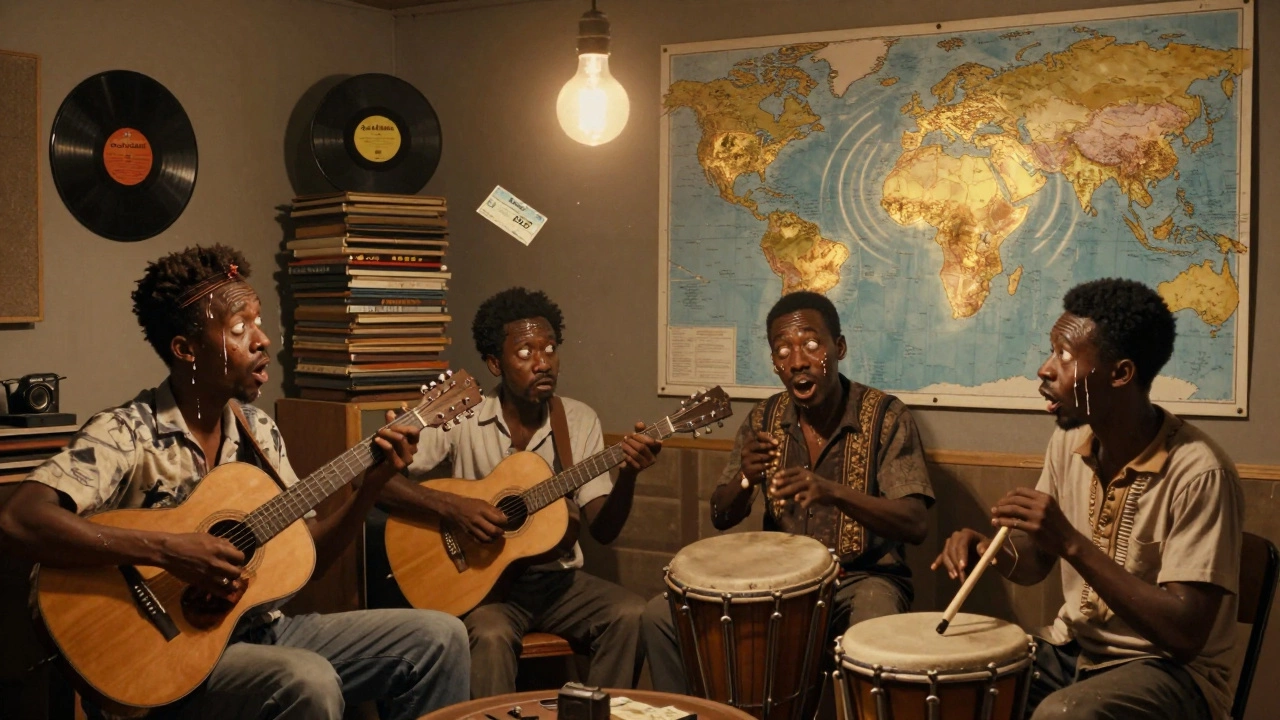
The 1970s didn’t just produce hits. It produced a language. A polyrhythmic grammar that modern music still speaks. Today, 63% of African pop records use the 12/8 time signature that Fela and Tony Allen perfected. WhoSampled.com found that 78% of all afrobeat samples in hip-hop come from recordings between 1973 and 1979. Burna Boy’s 2019 album “African Giant” samples 11 tracks directly from that era. Wizkid, Tiwa Savage, and Tems all carry the DNA of those decades in their production.
Why does it still matter? Because those musicians didn’t just adapt-they redefined what music could do. They turned rhythm into rebellion. They made drums speak politics. They turned guitars into storytelling machines. And they did it all with limited gear. Nigerian studios charged $2.25 to $3.00 per three-hour session. Musicians practiced for hundreds of hours just to master the independence of playing 6/8 rhythms on a standard drum kit. Tony Allen, Fela’s drummer, wrote a book in 2006 called “The Master Drummer” because no one had documented this before. He knew history was being made, and he wanted it preserved.
The Business Behind the Beat
The African music industry in 1975 generated $28 million USD-equivalent to $165 million today. Nigeria led with 35% of that, Ghana 22%, and South Africa 18%. But the money didn’t flow back to the artists. Most musicians earned 5% to 7% in royalties. Fela’s 100,000-copy sale of “Gentleman” netted him just $525. Meanwhile, record labels and foreign distributors pocketed the rest. Radio was the real engine. By 1975, 92% of Nigerians got their music from the radio. The BBC Africa Service dedicated 14 hours a week to African music by 1972-up from just four in 1968. That exposure turned local stars into continental icons.
Prince Nico Mbarga’s “Sweet Mother,” released in 1976, sold an estimated 13 million copies across Africa. It remains the best-selling African single of all time. No Western artist had ever reached those numbers. And yet, outside Africa, it barely registered. That’s the paradox of this era: the music moved the world, but the world didn’t always credit the source.
Today, we call it world music. Back then, it was just music. African music. And it was changing everything.