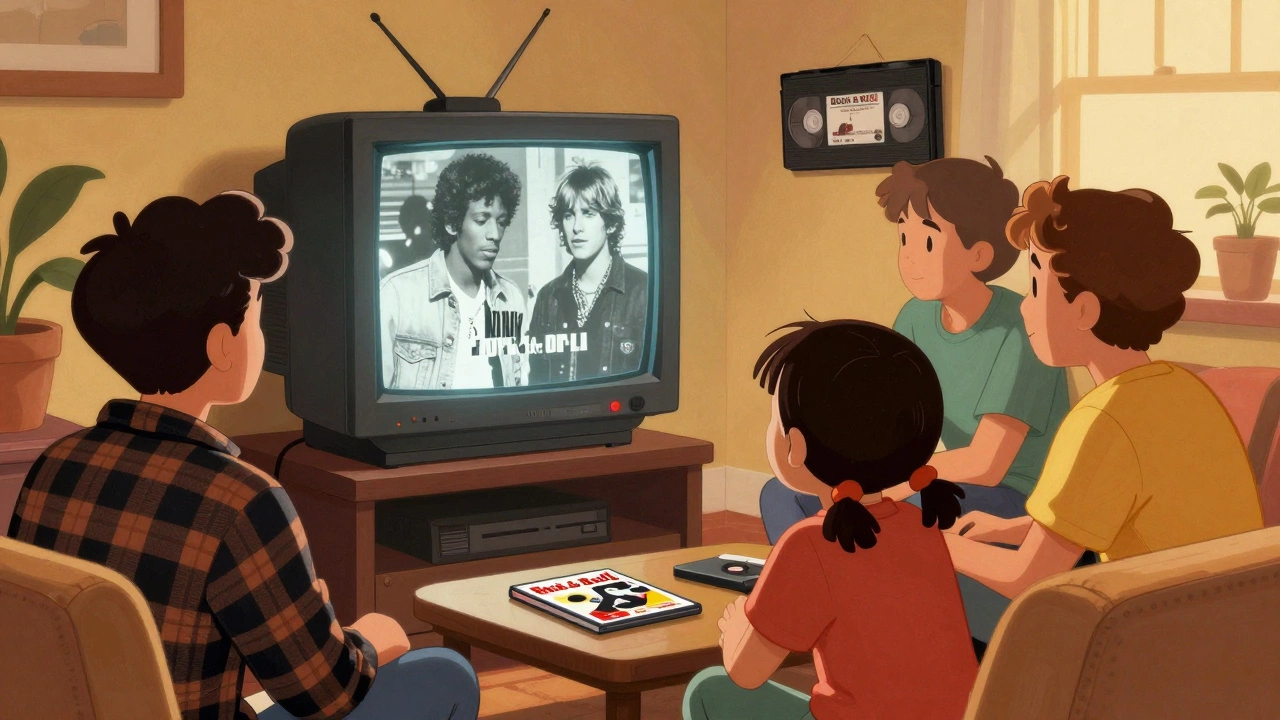

The 1990s didn’t just give us grunge, hip-hop’s golden age, and boy bands-it also gave us the first real golden age of music documentaries. Before streaming, before YouTube, before even high-definition TVs, music fans had two ways to experience deep, intimate stories about their favorite artists: television specials and early DVDs. These weren’t just promotional clips or concert recordings. They were carefully crafted narratives that turned music into history.
Television as the First Big Stage
Before anyone had a DVD player, the biggest platform for music documentaries was TV. And no series did it better than Rock & Roll, a 10-part documentary series produced by the BBC and WGBH Boston, executive produced by Quincy Jones. It aired in 1995 and covered everything from Chuck Berry to Nirvana. With over 40 million viewers across its run, according to WGBH’s internal reports, it was a cultural event. Families gathered around the TV not just to hear the music, but to see the stories behind it-the feuds, the breakthroughs, the breakdowns.
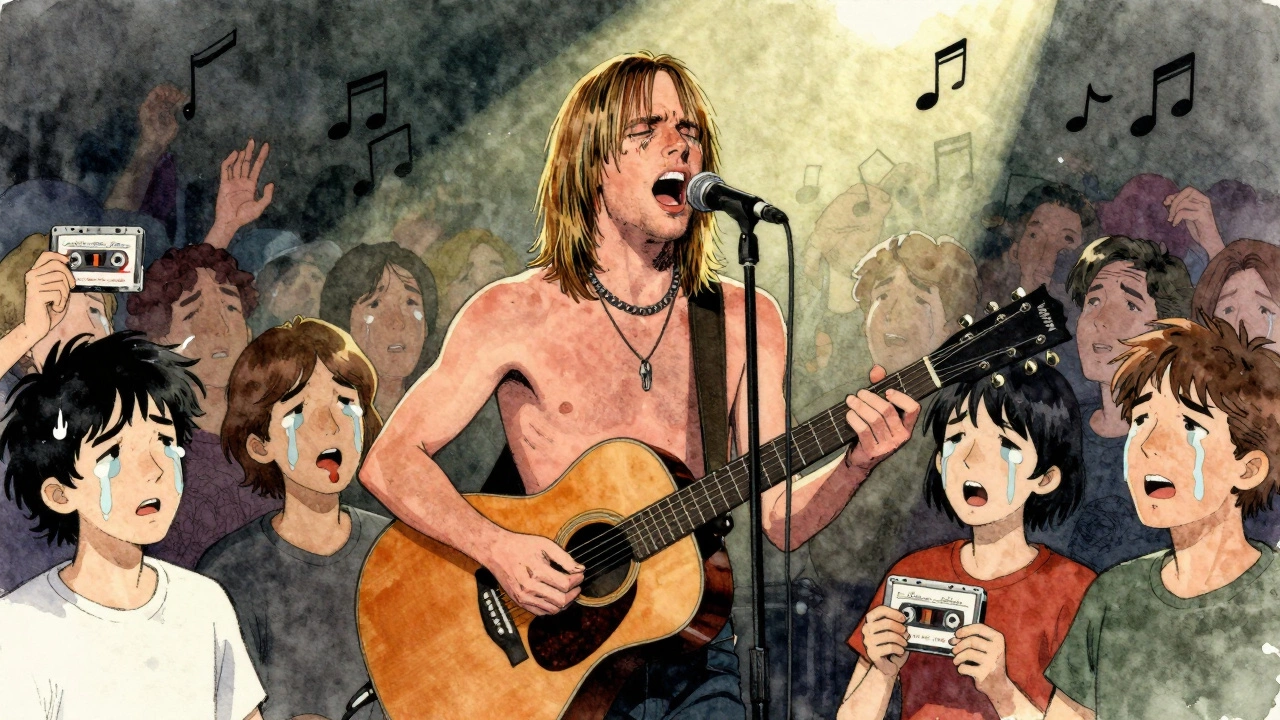
MTV Unplugged, which started in 1989, became the defining format of the decade. It wasn’t just live performances. It was raw. Emotional. Real. Eric Clapton’s 1992 Unplugged session, released as an album on August 25, 1992, sold over 26 million copies worldwide. That’s not just a hit-it’s a phenomenon. The show didn’t just showcase songs; it showed vulnerability. R.E.M.’s 1991 performance of "Losing My Religion" drew 28 million viewers, making it one of MTV’s most-watched episodes ever. When Kurt Cobain showed up in 1993, shirtless, voice cracking, playing "Where Did You Sleep Last Night?"-he didn’t just perform. He confessed.
The DVD Revolution: More Than Just Better Picture
When the first DVD players hit U.S. shelves in March 1997, they cost nearly $1,000. That’s over $1,900 today. Only early adopters bought them. But those who did? They were ready for something better than VHS.
VHS tapes were clunky. You had to rewind. You couldn’t skip to your favorite song without fast-forwarding through 20 minutes of interviews. DVDs changed all that. With random access, you could jump straight to Jimi Hendrix’s Monterey Pop performance or the full interview with Patti Smith. No more tape snarls.
Audio was the real game-changer. DVDs offered Dolby Digital 5.1 surround sound-something VHS could never match. A 1999 review in Home Theater Magazine found 87% of users said music documentaries on DVD sounded "significantly superior." Woodstock ‘94, released on DVD in 1999, became the benchmark. You didn’t just hear the crowd-you felt it. The bass thump, the crowd roar, the feedback squeal-all layered, immersive, alive.
The first major music documentaries on DVD were The Beatles Anthology and the Rock & Roll series. The latter came out in 1999 as a 4-disc set. It had director commentary, deleted scenes, photo galleries, and even subtitles for interviews. On VHS, you got the show. On DVD, you got the whole library.
Behind the Music: The Rise of the Artist Portrait
VH1’s Behind the Music, which launched in 1998, didn’t invent the artist biopic-but it perfected it. Each episode followed a formula: rise, fall, redemption. But it wasn’t just soap opera. The show used archival footage, home videos, and raw interviews. The DVD versions? They added 15-30 minutes of extra material. A deleted scene from the Nirvana episode showed Dave Grohl crying while talking about Kurt. That moment never aired on TV. But on DVD? It was there.
The format allowed for nuance. You could see how artists changed over time-not just through songs, but through their own words. The documentary didn’t just tell you what happened. It let you sit in the room with them.
Production Was a Nightmare
Behind every great music documentary was a mountain of paperwork and money. Producing a one-hour TV special cost between $250,000 and $500,000 in 1995. And 30-40% of that went to clearing music rights. The Rock & Roll series spent $2 million just to license songs. Quincy Jones used his connections to get rare footage-footage no one else could touch.
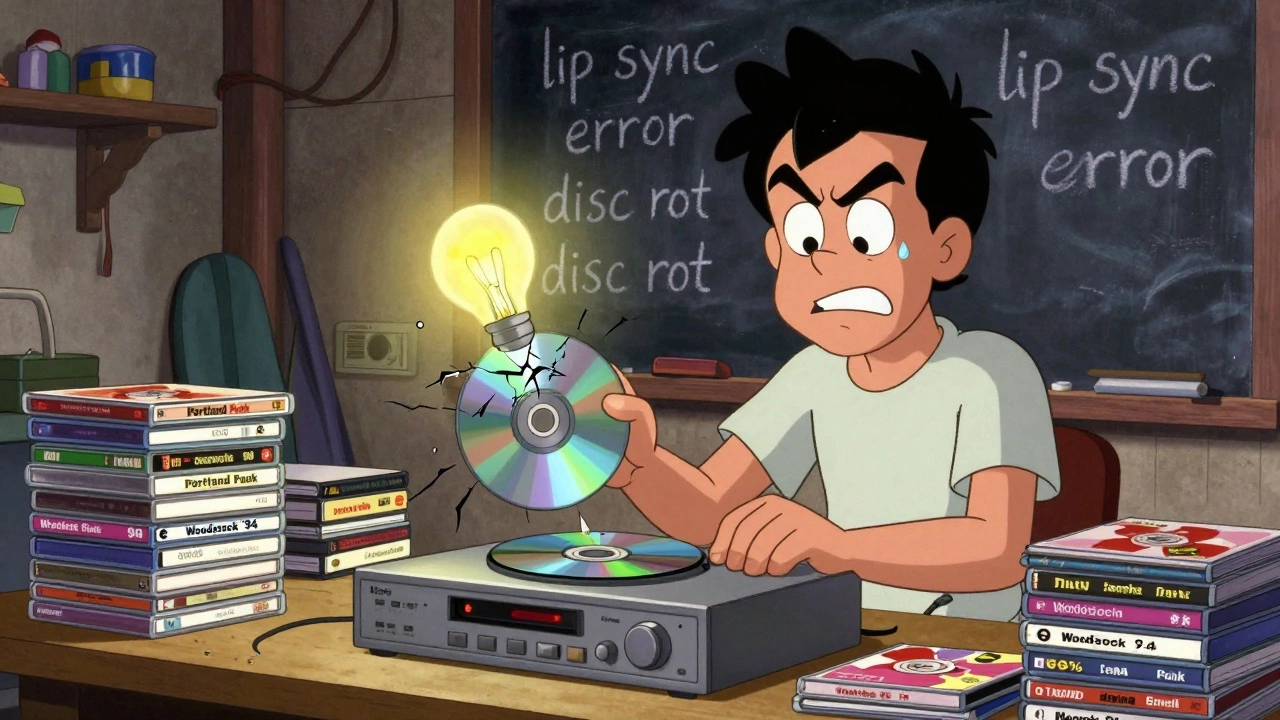
DVD authoring was even harder. You needed software like Sonic Solutions’ DVD Creator, which cost $15,000. Engineers spent months syncing audio, fixing lip-sync errors, and making sure menus worked across different players. A 2000 survey by the DVD Entertainment Group found 25% of early music DVDs had audio sync issues. Fans noticed. A 1999 forum post on DVDTalk complained: "I watched the first 10 minutes of the Unplugged DVD, and Eddie Vedder’s mouth was moving 3 seconds before the words came out. It ruined the whole thing."
The Market: Who Was Buying?
By 2000, music documentaries made up $150 million in annual sales. The buyers? Mostly men aged 25-54. The ratio? 65% male, 35% female. Universities and libraries bought 15% of the discs-not for entertainment, but for teaching. A professor at Berklee College of Music told Mix Magazine in 1999: "I use the Rock & Roll DVDs in my class. Students don’t realize how much they’re learning until they see Hendrix in 1967, then Pearl Jam in 1992, side by side."
The top three distributors were MPI Home Video, Rhino Entertainment, and WGBH. Together, they controlled 80% of the market. Independent producers fought for scraps. But they also had the most creative freedom. One indie filmmaker, working out of a garage in Austin, released a DVD called Portland Punk: 1985-1995 in 1999. It sold 3,000 copies. No one expected it. But it became a cult classic.
Flaws and Failures
DVDs weren’t perfect. Region coding locked North American discs to Region 1 players. If you bought a DVD in the U.S. and had a player from Europe, it wouldn’t play. A 2000 forum user wrote: "I bought Woodstock ‘94 because I wanted to show my German friends. The disc just says ‘invalid region.’ I cried."
Then there was "disc rot." Early DVDs, especially those pressed between 1997 and 2003, had a 10-15% failure rate. The reflective layer degraded. The laser couldn’t read it. Music documentaries were hit hardest-long run times meant more data, more chances for failure. The Library of Congress now estimates 20-30% of those early discs are unreadable.
And yet, people loved them. A 2018 Reddit thread on r/90s captured it best: "There was something sacred about gathering around the TV with your friends, rewinding the VHS after the credits. You didn’t just watch the documentary. You lived it."
The Legacy
The Rock & Roll series was restored and re-released in 4K Ultra HD in 2021. It sold 25,000 units in its first month. Why? Because the storytelling didn’t age. The interviews still hit. The footage still matters.
Today’s streaming documentaries-Summer of Soul, David Byrne’s American Utopia-borrow everything from the 1990s. The multi-angle cuts. The director commentary. The photo galleries. The interactive menus. All of it started on DVD.
The 1990s didn’t just document music. It preserved it. And for the first time, we could pause, rewind, and come back to it-again and again.
What was the first music documentary released on DVD?
The first major music documentaries released on DVD in 1997 included the 1994 re-release of the 1970 film Woodstock and The Beatles Anthology series. Both were among the earliest titles to showcase the DVD format’s superior audio and video quality, and they helped drive early adoption among music fans.
How did MTV Unplugged change music documentaries?
MTV Unplugged turned live performances into intimate, emotional narratives. Unlike traditional concert films, it stripped away the spectacle-no pyrotechnics, no backup dancers. Just artists, acoustic instruments, and raw emotion. Eric Clapton’s 1992 session and Nirvana’s 1993 performance became defining moments, proving that vulnerability could be as powerful as volume. It created a new subgenre: the artist portrait.
Why were DVDs better than VHS for music documentaries?
DVDs offered higher resolution (480p vs. VHS’s 240-250 lines), widescreen 16:9 format, Dolby Digital 5.1 surround sound, and random access. You could jump straight to your favorite song or interview without fast-forwarding. They also included bonus features like commentaries, photo galleries, and deleted scenes-something VHS couldn’t handle due to limited storage.
What was the biggest challenge in producing early music DVDs?
The biggest challenge was technical: synchronizing multiple audio tracks, mastering MPEG-2 compression, and dealing with early authoring software that was expensive and unstable. A 2000 industry survey found 25% of early music DVDs had lip-sync errors. Also, region coding limited international access, and disc rot affected 10-15% of early pressings.
Did music documentaries from the 1990s influence today’s streaming shows?
Absolutely. The interactive features pioneered on DVDs-director commentaries, multi-angle cuts, photo galleries, and extended interviews-are now standard on Netflix, Apple TV+, and Max. Shows like Summer of Soul and ReMastered use the same storytelling techniques: deep archival research, emotional interviews, and layered sound design. The 1990s set the template.
Today, the physical discs are fading. But the stories they told? They’re still playing.


