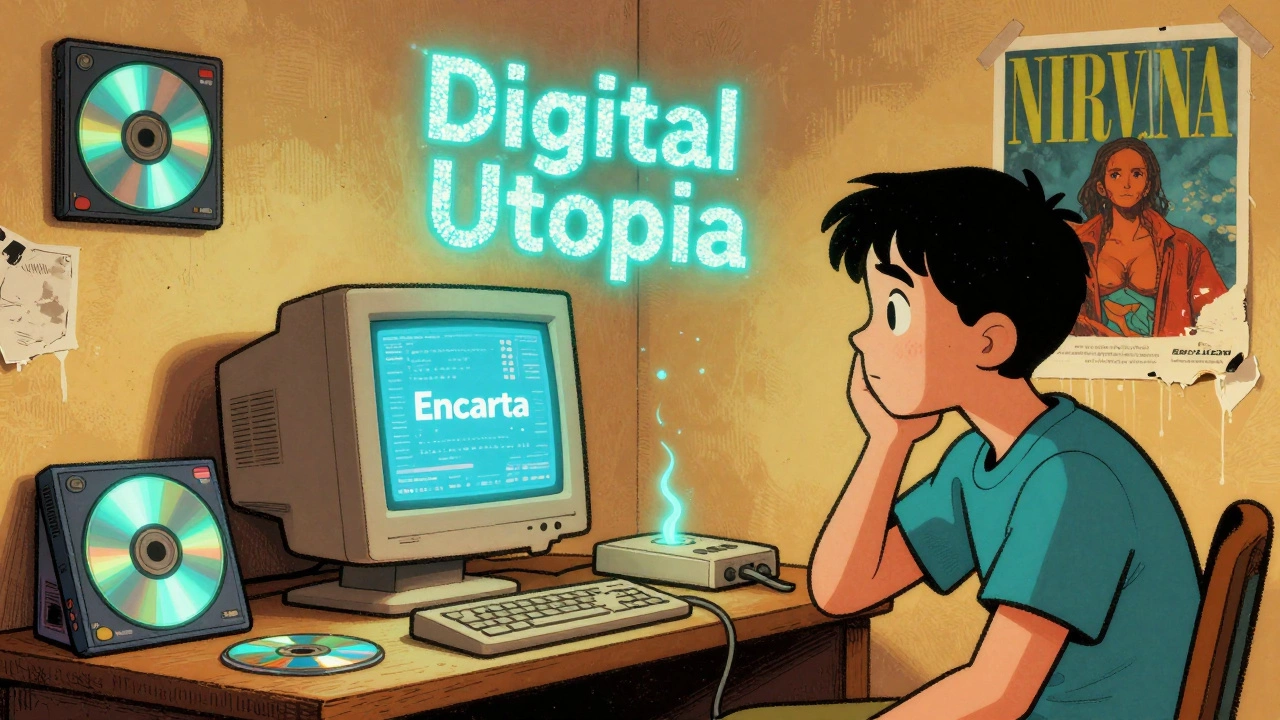

The 1990s weren’t just about grunge and gangsta rap. They were a time when technology promised to change everything - and then, just as suddenly, it didn’t. The same energy that fueled the rise of Nirvana, Tupac, and Radiohead also powered a wild, reckless tech boom. CD-ROM encyclopedias, dial-up modems, and the promise of a digital utopia were everywhere. But by 2001, it all collapsed. And in the wreckage, something unexpected happened: people started to miss it.
Back then, the music industry didn’t just react to tech - it was shaped by it. Record labels scrambled to license songs for early websites. MTV’s influence was fading, but new channels like AOL and Napster were rising. The same people who screamed about corporate sellouts in rock were now obsessing over whether the internet would kill music or save it. It wasn’t just about sound - it was about control, access, and identity.
The Hype Was Real - And It Was Everywhere
In 1995, you couldn’t walk into a Best Buy without seeing a demo of Encarta on a 14-inch monitor. For $100, you got an entire encyclopedia, music clips, and even a virtual tour of the Louvre. It was supposed to be the future. But by 1999, those same discs were gathering dust. Why? Because the internet was coming - and it was free.
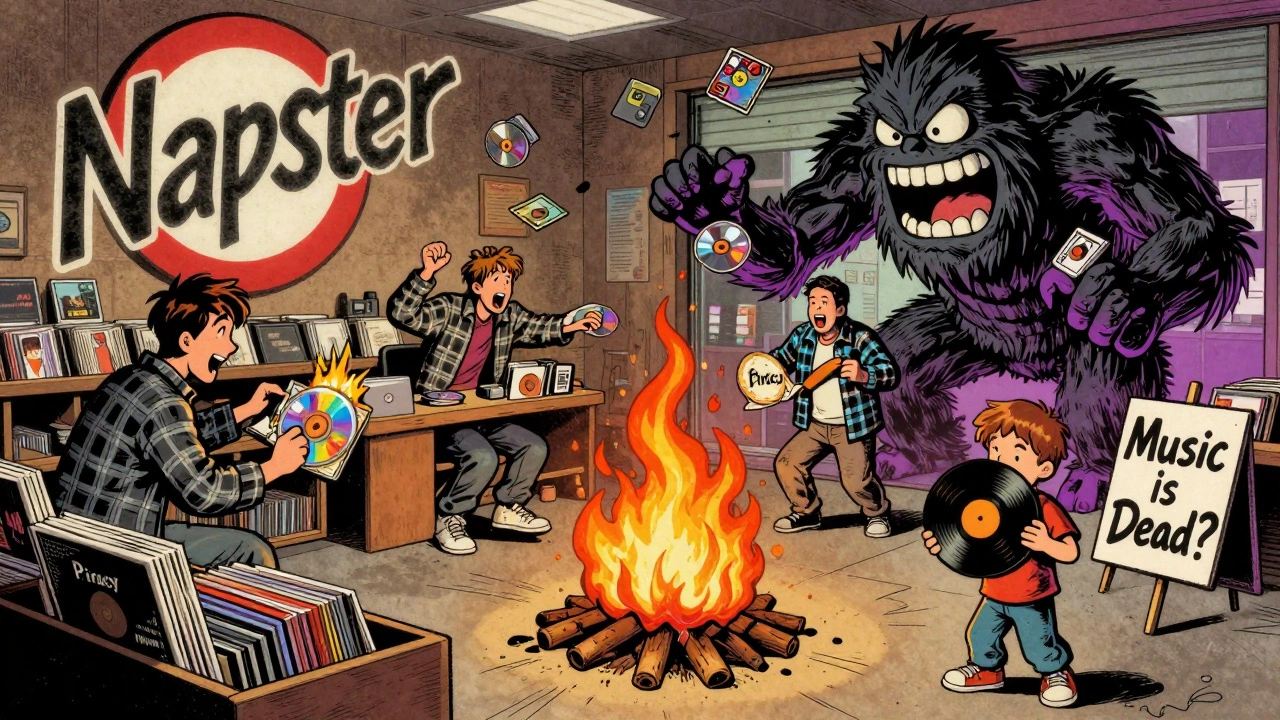
Meanwhile, in music, the hype was just as loud. Record companies claimed CD sales would never decline. They were wrong. Napster launched in 1999. By 2000, college students were swapping entire albums in minutes. The music industry panicked. They sued. They cried. They didn’t adapt. The same pattern repeated in tech: companies sold dreams, not products. They didn’t build useful tools - they sold visions of a world where everyone would be connected, rich, and free. And when that world didn’t arrive overnight, the backlash began.
The Backlash Wasn’t Just Economic - It Was Emotional
The dot-com crash wasn’t just about stock prices. It was about broken promises. People had quit jobs, moved cities, invested life savings - all because a startup had a .com domain and a slick PowerPoint. When the bubble burst, it wasn’t just investors who lost money. It was dreamers. It was kids who thought they’d be the next Gates or Brin.
And in music? The backlash came in the form of nostalgia for a simpler time. Fans started talking about “the good old days” of physical albums, liner notes, and waiting for a new release. The emotional connection to music wasn’t just about the sound - it was about the ritual. Buying a CD. Opening the case. Reading the credits. Listening in order. That was the culture. And when digital files replaced that, something felt lost.
By 2002, the same people who once cheered for innovation were now mourning it. A 1998 interview with Kurt Cobain’s producer, Butch Vig, captures it perfectly: “We thought the internet would make music more personal. Instead, it made it disposable.” That line wasn’t just about music. It was about the entire decade’s trajectory - hope, then collapse, then longing.
Burnout Was the Quiet Aftermath
After the crash, tech didn’t die. It changed. The companies that survived - Amazon, eBay, Oracle - stopped selling dreams. They started selling services. They stopped talking about “revolution” and started talking about “efficiency.” The same thing happened in music. Record labels stopped trying to stop piracy. They started licensing to iTunes. The revolution wasn’t in the tech - it was in the attitude.
But the burnout? That stayed. People who worked in tech in the late 90s didn’t just lose jobs - they lost faith. A 2003 survey by the St. Louis Federal Reserve found that nearly 60% of tech workers who lost jobs between 2000 and 2002 never returned to the industry. Many switched careers. Some went back to school. Others just disappeared.
And music fans? They stopped chasing trends. They stopped buying albums on opening day. They started digging through used record stores. They started valuing vinyl, cassette tapes, bootlegs. The music they loved wasn’t the music of the 90s - it was the music that survived the 90s. Pearl Jam. PJ Harvey. The Afghan Whigs. Bands that didn’t need a website to matter.
Today’s AI Boom Feels Familiar
Look at AI today. Companies are selling “the future” again. ChatGPT Enterprise. AI-powered music generators. Tools that claim they’ll “unlock creativity.” The language is identical. “This will change everything.” “You won’t believe how much time you’ll save.” “It’s not a tool - it’s a revolution.”
But here’s what history shows: the revolution doesn’t come from the tech. It comes from how people use it - or reject it.
Just like in the 90s, we’re seeing the same pattern. First, hype. Then, backlash. Then, burnout. Then, quiet adaptation.
Today’s teens are nostalgic for the 1990s - not because life was better, but because it felt slower. No algorithms. No notifications. No pressure to be “always on.” They’re buying vinyl. They’re using flip phones. They’re listening to music without playlists. That’s not a rejection of technology. It’s a rejection of the pressure that comes with it.
What the 1990s Taught Us About Tech and Culture
The 1990s didn’t end because the internet failed. It ended because we expected too much too soon. We thought technology would fix our loneliness. Our boredom. Our lack of meaning. It didn’t. It just gave us more of the same - faster.
The same is true today. AI won’t make music better. It won’t make us happier. It won’t replace creativity. But it will change how we experience it. And if we’re not careful, we’ll burn out again.
The real lesson of the 1990s isn’t about tech. It’s about us. We don’t need more innovation. We need more honesty. More space. More silence.
Maybe that’s why, in 2026, people are still listening to Radiohead’s OK Computer - not because it’s perfect, but because it understood the weight of all this before it even happened.


