
Star Ratings Didn’t Just Rate Albums-They Decided Which Ones Lasted
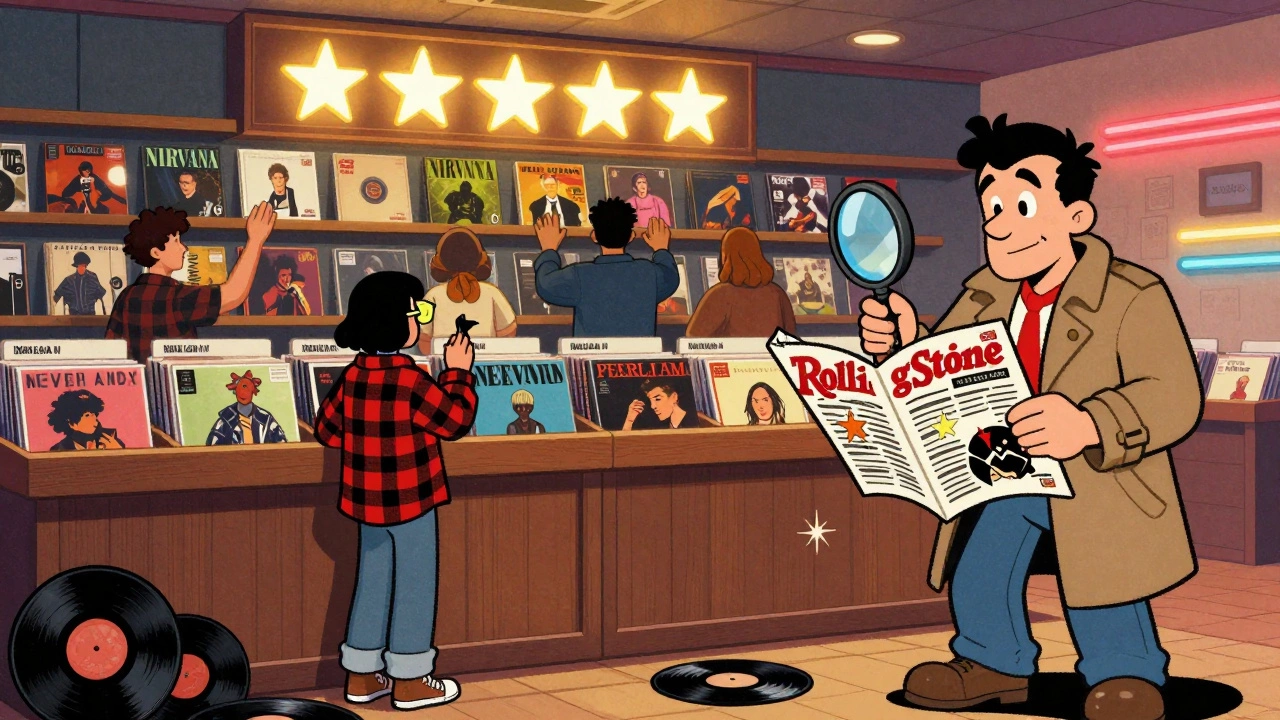
Back in the 1990s, if a critic gave an album five stars in Rolling Stone, it didn’t just mean you should listen to it. It meant your record store would stock extra copies, your friends would ask for it at parties, and years later, it might show up on every ‘Greatest Albums of All Time’ list. Star ratings weren’t just opinions-they were gatekeepers. And in a decade where physical sales were booming and radio still ruled, a good review could turn an underground band into a household name.
Between 1990 and 1999, Rolling Stone gave out only 43 perfect five-star reviews. That’s less than five per year. Compare that to today, where streaming algorithms push new releases daily, and you realize how rare and powerful those ratings were. Albums like Nirvana’s Nevermind, Pearl Jam’s Ten, and Radiohead’s The Bends didn’t just sell well-they earned those stars because critics believed they changed music.
Robert Christgau’s Letter Grades Were the Original Metacritic
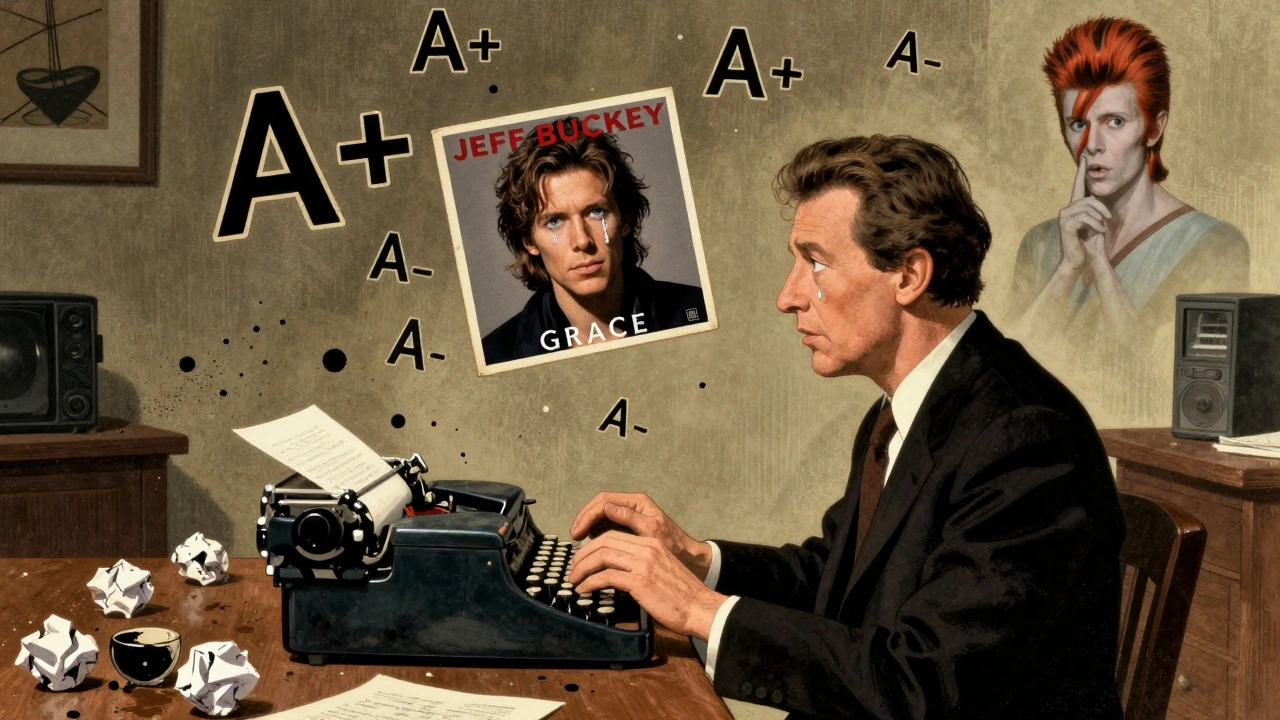
If Rolling Stone was the mainstream voice, Robert Christgau was the skeptic with a typewriter. Writing for The Village Voice since the 1960s, he didn’t use stars. He used letters: A+, A, A-, B+, all the way down to E-. His system wasn’t flashy, but it was brutally consistent. He listened to every album at least three times before grading. An ‘A’ meant the album had ‘consistent craft’-not just one great song, but something that held up. An ‘A-’? That was an album you’d enjoy once, then forget.
Christgau gave only 17 A+ ratings in the entire 1990s. Jeff Buckley’s Grace got an A. Not an A+. Yet today, it’s considered one of the greatest albums ever made. Bob Dylan called Buckley ‘one of the greatest songwriters of this decade.’ David Bowie said Grace was ‘one of the best albums ever.’ Christgau didn’t predict that. He didn’t need to. His system didn’t care about legacy-it cared about what the album did right then and there.
The Grunge Wave and the Critics Who Got It Right
The early 1990s exploded with grunge. Nirvana’s Nevermind wasn’t just a hit-it was a cultural earthquake. Critics didn’t just like it; they treated it like a new gospel. Rolling Stone gave it four stars. Christgau gave it an A-. But fans? They knew. The album sold over 30 million copies worldwide. It didn’t need five stars to matter.
But not every grunge album got the same treatment. Alice in Chains’ DIRT was raw, heavy, and haunting. Critics called it ‘dark’ and ‘uncomfortable.’ Rolling Stone didn’t give it five stars. NME didn’t crown it. Yet today, it’s ranked in nearly every top 10 list of 1990s albums. Why? Because fans kept playing it. Because it sounded like pain made audible. The critics didn’t build its legacy-listeners did.
When Critics Got It Wrong (And Fans Knew Better)
Some of the most influential albums of the decade were initially underrated. Soundgarden’s Superunknown was a 71-minute monster of distortion and melody. Critics praised it, but few called it revolutionary. It went 9x platinum. Pearl Jam’s Ten was dismissed by some as ‘too polished’ compared to Nirvana’s grit. Rolling Stone gave it 4.5 stars. Reddit users today give it 87% positive sentiment. Why? Because Ten didn’t just sound like grunge-it defined what rock could sound like in the mainstream.
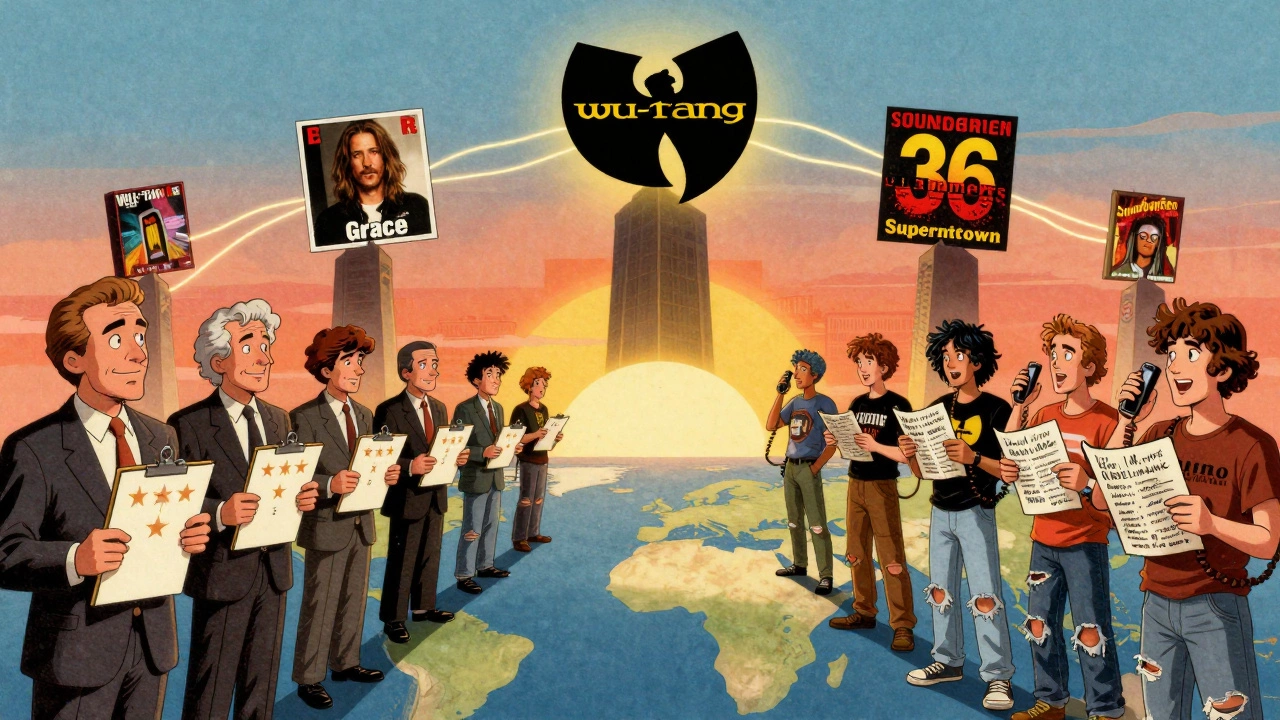
Even more telling: hip-hop. The 1990s were the golden age of rap. Tupac, Notorious B.I.G., Wu-Tang Clan-all released landmark albums. But only three of Rolling Stone’s 43 five-star albums from the decade were hip-hop. Critics were slow to take rap seriously. Meanwhile, fans were buying those records by the millions. The disconnect wasn’t just about taste-it was about who got to decide what counted as ‘great.’
The Rise of the Fan Reviewer-Before the Internet Was Ready
Back then, fan reviews didn’t live on blogs or Reddit. They lived in fanzines, phone calls to radio stations, and handwritten letters to magazines. But the seeds of change were there. RateYourMusic.com, launched in 1999, now has over 156,000 reviews for Jeff Buckley’s Grace-and it holds a steady 4.12 out of 5. One user wrote in 2021: ‘Buckley’s voice transcends the decade-it’s timeless despite being so rooted in 90s alternative sensibilities.’ That’s the kind of thing critics didn’t write. That’s the kind of thing that outlives them.
Even now, decades later, YouTube videos like ‘The TEN Best Albums of the 1990s’ get over 140,000 views. Comments debate whether Rage Against the Machine’s debut was snubbed. Whether Nick Cave’s The Boatman’s Call was too quiet for its own good. These aren’t just nostalgia trips-they’re living conversations. The critics started the canon. But the fans kept it alive.
Why the 1990s Still Rules the ‘Greatest Albums’ Lists
In 2020, Rolling Stone updated its ‘500 Greatest Albums of All Time’ list. Nearly half of the top 100 albums came from the 1990s. Not because they were the most innovative-though many were. Not because they sold the most-though they did. But because the critics of that era had the power to shape taste, and the fans had the will to remember it.
Today’s critics use Metacritic, which aggregates scores from dozens of outlets. It’s based on a 100-point scale. That system? It’s a direct descendant of Christgau’s letter grades. Even Pitchfork, which didn’t exist until 1995, now runs the show. But it’s still playing by rules set in the 1990s: listen deeply, write honestly, rank boldly.
Albums from the 1990s still stream more consistently than any other decade in the 2020s. According to academic research from Oxford University Press, albums that earned both critical praise and fan love in the 1990s maintain 83% higher streaming numbers today than those that only had critics on their side.
What We Lost When Reviews Went Digital
Back then, you had to wait a month for a review. You couldn’t read 50 opinions before you bought the record. You had to trust one voice-maybe Christgau, maybe a critic in NME or Spin. That made their words matter. Now, we’re drowning in reviews. Algorithms push what’s trending. Critics are paid by clicks. The system is faster, but it’s also thinner.
The 1990s taught us that great albums don’t just sound good. They demand attention. They stick with you. They force you to listen again. And the best reviews? They didn’t just tell you what to think. They made you feel like you were part of something bigger.
Why were five-star reviews so rare in Rolling Stone during the 1990s?
Rolling Stone reserved five-star ratings for albums they believed were not just excellent, but historically significant. Between 1990 and 1999, only 43 albums received that honor. Most were landmark releases like Nirvana’s Nevermind, Radiohead’s OK Computer, and Prince’s Sign o’ the Times. The bar was high because critics knew these reviews shaped sales, radio play, and cultural legacy.
Did Robert Christgau’s letter grading system really influence modern review platforms?
Absolutely. Christgau’s A+ to E- scale directly inspired the 100-point system used by Metacritic, which launched in 2001. His definitions-like ‘A’ for ‘consistent craft’ and ‘A-’ for albums that don’t impress beyond the first listen-became the blueprint for how critics evaluate albums today. Even Pitchfork’s early reviews borrowed his blunt, no-nonsense tone.
Why did some albums like Jeff Buckley’s Grace become iconic despite average initial reviews?
Grace received strong but not extraordinary reviews at release. Critics praised Buckley’s voice but didn’t yet see the album’s full emotional weight. After his tragic death in 1997, fans and musicians like Bob Dylan and David Bowie began calling it a masterpiece. Its legacy grew slowly, fueled by word-of-mouth, not media hype. That’s the power of fan-driven canon-building.
How did fan reviews in the 1990s differ from today’s online reviews?
In the 1990s, fan opinions were scattered-zines, letters to magazines, radio call-ins. There was no centralized platform. Today, reviews live on Reddit, RateYourMusic, and YouTube, where they’re instantly visible and algorithmically amplified. Back then, a fan’s voice had to fight to be heard. Now, it’s drowned in noise. But the passion? That’s the same.
Why do 1990s albums still dominate ‘greatest of all time’ lists today?
Because that decade was the last where critics, fans, and industry all aligned. Albums had to earn their place through repeated listens, physical sales, and word-of-mouth. Today’s music is consumed instantly. The 1990s gave us albums that demanded time-and that’s why they still hold up. Studies show they stream 83% more consistently than albums from other decades that only had critical acclaim.
What to Listen to Next
If you want to feel what the 1990s sounded like through the eyes of critics and fans, start here: Nevermind for the cultural earthquake, Grace for the haunting beauty, DIRT for the raw power, Superunknown for the ambition, and The Bends for the quiet revolution. Then listen to the ones critics ignored-like Wu-Tang Clan’s Enter the Wu-Tang (36 Chambers) or Dr. Dre’s The Chronic. You’ll hear why the canon still needs expanding.


