
How the 1980s Changed Music Forever - One Tape Machine at a Time
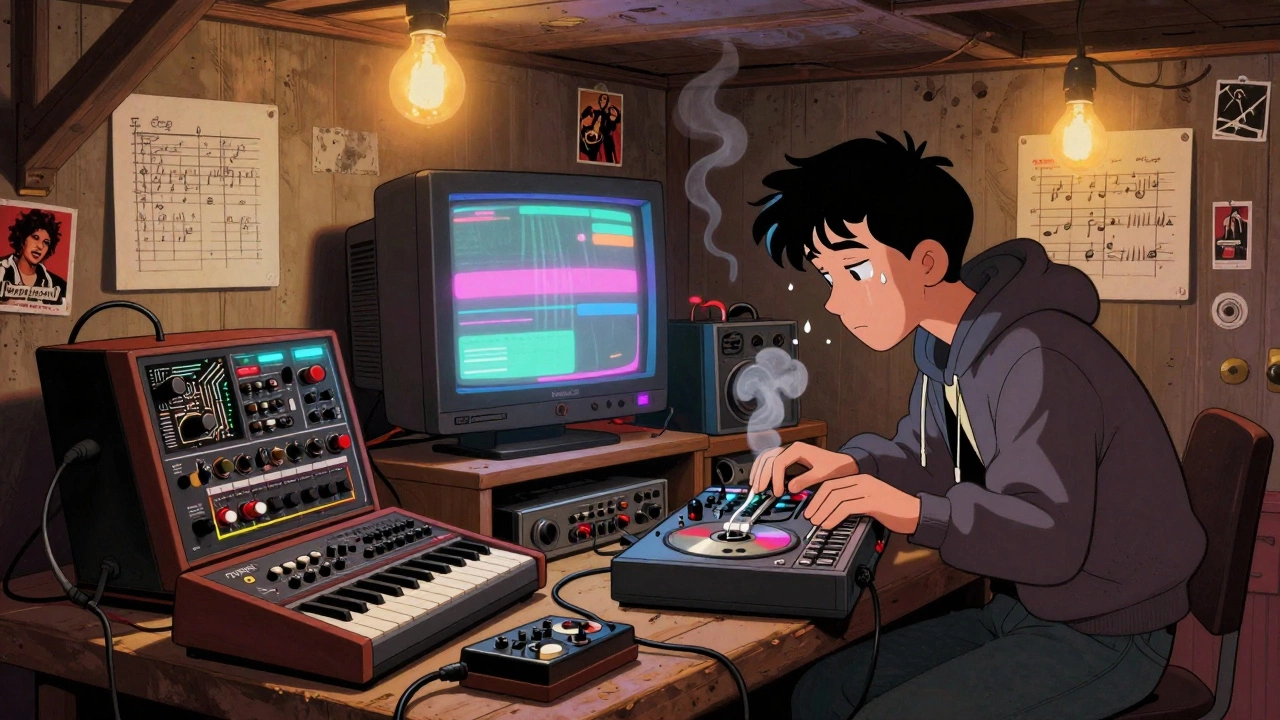
Back in the early 1980s, if you wanted to make a hit record, you needed a studio. Not just any studio - a professional one, with big reels of tape, expensive gear, and engineers who knew how to make a snare sound like a thunderclap. But something shifted around 1983. Suddenly, you didn’t need a label, a band, or even a drummer. All you needed was a MIDI cable, a drum machine, and a synth that cost less than a car payment.
Think about that. A teenager in a basement in Ohio could make a track that sounded like it came from a New Wave band in London. A bedroom producer in Detroit could build a rhythm that moved dance floors in Tokyo. This wasn’t luck. It was technology - raw, clunky, and revolutionary.
The MIDI Breakthrough: When Machines Started Talking
Before MIDI, every instrument spoke its own language. A synth from Roland couldn’t talk to a drum machine from Yamaha. If you wanted to play a bassline on your synth and trigger a drum pattern at the same time, you had to hit record on both machines manually. It was messy. It was slow. And it was impossible to get tight.
Then, in August 1983, MIDI changed everything. The Musical Instrument Digital Interface wasn’t a sound. It wasn’t a new synth. It was a language - a simple set of digital signals that let instruments talk to each other. Suddenly, a Roland TR-808 could follow a sequence from a Yamaha DX7. A sequencer could control multiple devices at once. And for the first time, one person could build a full song without ever touching a live instrument.
Artists didn’t just adopt MIDI - they depended on it. Depeche Mode’s 1984 album Some Great Reward was built almost entirely on a Roland MC-500 sequencer and a Jupiter-8 synth. No session musicians. No big studio. Just one guy, a handful of boxes, and a whole lot of patience.
The Drum Machines That Built a Decade
If you hear a track from 1985 and it has a punchy, robotic kick drum with a long, ringing tail - you’re hearing the Roland TR-808. It wasn’t even supposed to be a drum machine. Roland designed it as a practice tool for guitarists. But producers quickly realized something: the 808’s bass drum didn’t sound like a real kick. It sounded like a punch to the chest. The snare? Like a tin can hit with a bat. The hi-hats? Perfectly stiff. Perfectly unnatural. And that’s why it became iconic.
It wasn’t just the 808. The TR-909 came in 1983 with sampled cymbals and a MIDI port. The Linn LM-1 had real drum samples, but it cost $5,000. The TR-808? $1,200. And when Roland stopped making it in 1984, they dumped the remaining stock. That’s how Prince, Afrika Bambaataa, and later, hip-hop producers got their hands on them for next to nothing.
These machines didn’t just replace drummers. They redefined rhythm. The 808’s kick didn’t decay - it exploded. That’s why tracks like Marvin Gaye’s Sexual Healing and Afrika Bambaataa’s Planet Rock still sound like future music. They weren’t trying to sound real. They were trying to sound powerful. And they did.
The Synths That Defined the Sound
When the Yamaha DX7 dropped in late 1983, it cost $2,000. That’s more than a new car today. But it sold over 200,000 units. Why? Because it could make sounds no analog synth ever could.
FM synthesis was a math problem. Six operators, layered like a digital orchestra. It could mimic a piano. A bell. A brass section. But most of the time, it just made that glassy, cold electric piano sound - the one that dominated pop radio from 1984 to 1988. You hear it on Michael Jackson’s Thriller. On Phil Collins’ Face Value. On literally every TV commercial from that decade.
Then there was the Roland Juno-106. It cost less, had six voices, and a built-in chorus that made everything sound like it was floating. That lush, shimmering pad on Depeche Mode’s People Are People? Juno-106. That warm bassline on Pet Shop Boys’ West End Girls? Juno-106. It didn’t have the complexity of the DX7, but it had soul. You could twist a knob and instantly feel the sound change. No menus. No buttons. Just knobs.
These synths didn’t just add sounds. They created moods. The DX7 was cold, sleek, modern. The Juno was warm, dreamy, human. Together, they gave 1980s music its dual personality: mechanical yet emotional.
The Gated Reverb Secret: How a Mistake Made History
One of the most famous sounds of the 1980s - that huge, explosive snare drum that cuts through a mix like a gunshot - was an accident.
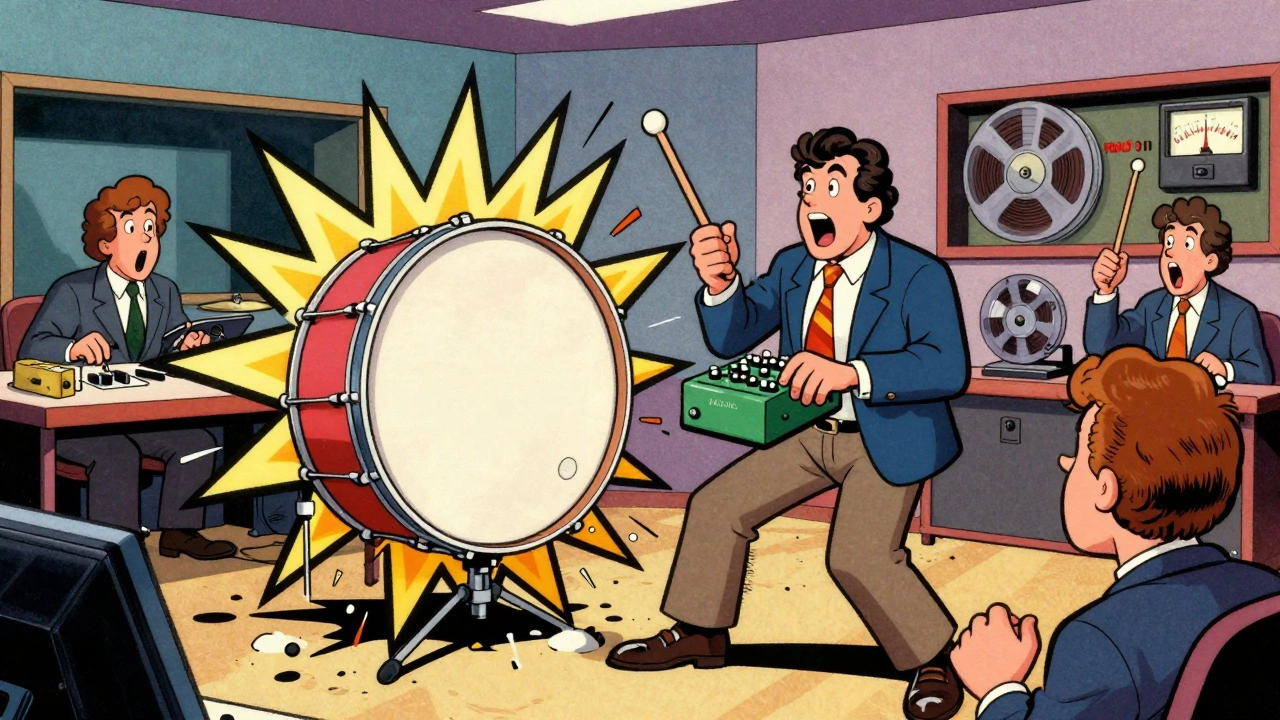
Producer Hugh Padgham was recording Phil Collins’ In the Air Tonight at Townhouse Studios in London. The drums were recorded in a big room with a lot of natural reverb. But the reverb was too long. Too muddy. So Padgham tried something: he ran the snare signal through a noise gate - a device meant to cut out background noise. He left the gate open just enough so that the reverb would cut off suddenly after the snare hit.
The result? A drum sound that didn’t exist before. It was sharp. It was huge. It was unnatural. And it became the signature of the decade.
From Peter Gabriel to Genesis to Toto, every producer wanted that gated reverb snare. It was so popular, engineers started building it into drum kits on purpose. They’d record drums in a dead room, then add artificial reverb and gate it. It wasn’t about realism. It was about power. About impact. About making the snare the center of the universe.
Recording on Tape: No Undo Button
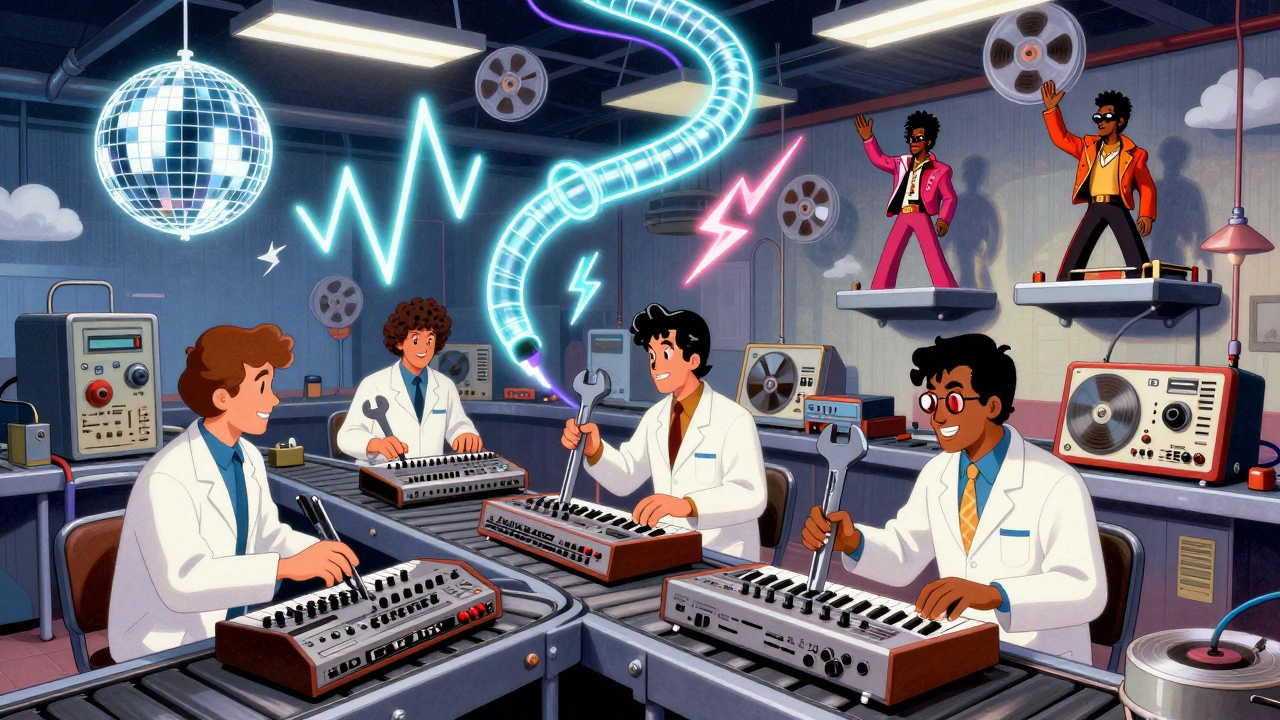
Today, you can record 50 takes of a vocal, stack them, comp them, pitch-correct them, and still have time for coffee. Back then? You had eight tracks. Maybe sixteen. And once you recorded over them, they were gone.
Sting recorded the original version of Message In A Bottle on a Tascam Portastudio 144 - a four-track cassette recorder that cost $899. He’d lay down a guide vocal, then bounce it to free up space. Then he’d record the real vocal over it. By the third bounce, the tape hiss was audible. But he kept it. It gave the track warmth. It gave it life.
There was no auto-tune. No quantize. No plugin to fix a wrong note. If you messed up a bassline, you had to re-record the whole thing. That pressure made people play better. It made them commit. You didn’t have the luxury of editing later. You had to get it right the first time.
And that’s why so many 1980s tracks still feel alive. They weren’t stitched together. They were performed. Every note was earned.
The Limitations That Sparked Creativity
People think the 1980s sound was about excess. Big drums. Bright synths. Over-the-top reverb. But the truth? It was about scarcity.
You had limited tracks. Limited effects. Limited time. You couldn’t just add more layers. You had to make each one count. A synth patch had to do double duty - carry the melody and the harmony. A drum machine had to be the rhythm and the groove. You couldn’t rely on studio magic. You had to rely on your ears.
That’s why the best 1980s tracks still sound amazing today. They weren’t made to be perfect. They were made to be powerful. To be memorable. To be felt.
Modern producers spend hours chasing that 1980s vibe with plugins. U-he Diva. Arturia’s V Collection. They’re great. But they’re still software. You can’t touch them. You can’t feel the heat of a tape head. You can’t hear the tape eat itself when the humidity rises.
Those flaws? They weren’t bugs. They were features.
Why the 1980s Still Matter
Today, you can make a hit record on a laptop. You don’t need a studio. You don’t need a band. You don’t even need to play an instrument.
But you know what you miss? The struggle. The limitation. The pressure to get it right because you couldn’t fix it later.
The 1980s taught us that constraints don’t kill creativity - they sharpen it. A drum machine with 10 preset rhythms forced producers to invent new patterns. A synth with 48 pages of manual forced them to learn by ear. A four-track recorder forced them to arrange with purpose.
And that’s why, in 2026, producers still chase that sound. Not because it’s nostalgic. But because it’s real. Because it was made with hands, not clicks. Because it was born from limitation - and that’s where the best music always comes from.
What made the Roland TR-808 so special in 1980s music?
The TR-808 wasn’t designed to be a professional drum machine - it was meant as a practice tool. But its sounds were unlike anything else: the bass drum had a deep, booming attack with a long tail, the snare was sharp and metallic, and the hi-hats were crisp and synthetic. These sounds didn’t try to mimic real drums - they created a new sonic identity. Producers like Prince, Afrika Bambaataa, and later, hip-hop artists, used it to build entirely new genres. Its affordability after production stopped made it accessible, and its unique character became the backbone of electronic and dance music.
How did MIDI change the way music was made in the 1980s?
Before MIDI, each instrument had its own control system - you couldn’t link a synth to a drum machine. MIDI changed that by creating a universal digital language. Suddenly, one sequencer could control multiple devices. A musician could program a bassline on a keyboard and have it trigger a drum machine, a synth, and a sampler all at once. This turned solo artists into one-person bands and made home studios viable. It also enabled precise timing, which led to the quantized, machine-like grooves that define 1980s pop and dance music.
Why did producers use gated reverb on drums?
Gated reverb was born from accident. Producer Hugh Padgham was recording Phil Collins’ drums and left a noise gate open on the snare channel. The reverb naturally decayed, but the gate cut it off abruptly, creating a huge, punchy sound with no lingering tail. It was perfect for the era’s big, bold production style. The effect became iconic because it made drums sound bigger than life - a sonic signature for 1980s rock, pop, and new wave. It wasn’t about realism - it was about impact.
How did the Yamaha DX7 become so popular despite its complexity?
The DX7 used FM synthesis, which was far more complex than analog synthesis. Its manual was 48 pages with little explanation. But it could produce sounds analog synths couldn’t - bright electric pianos, bell tones, metallic pads - all with incredible clarity. Its preset sounds were instantly recognizable, and they dominated radio. Even though programming it was hard, musicians didn’t need to program it. They just used the factory presets. That’s why it sold over 200,000 units - it didn’t require skill to sound great.
What were the biggest challenges of recording on tape in the 1980s?
Tape machines were unreliable. Humidity could cause tape to stick or shed, static could fry heads, and tape hiss built up with each bounce. You had to clean heads after every 10 hours of use. Editing was impossible - if you messed up a take, you had to re-record the whole thing. Limited track counts forced musicians to plan every layer. There was no undo button. No second chances. That pressure led to tighter performances and more intentional arrangements - qualities that still define classic 1980s recordings.


