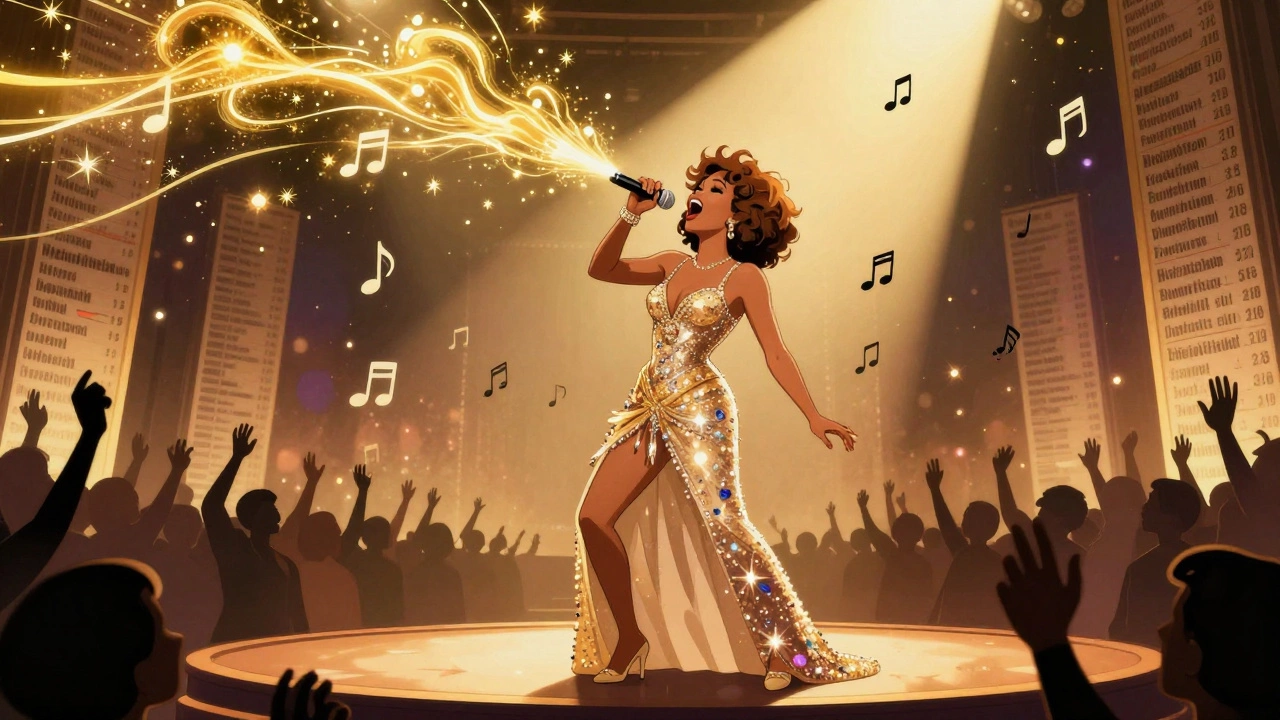

When you think of 1980s R&B, you don’t just hear music-you feel it. The airwaves were thick with emotion, velvet vocals, and songs that didn’t just play on the radio, they lived inside you. Three women stood at the center of it all: Whitney Houston, Sade, and Anita Baker. Each brought something different. One shattered records. One whispered into your soul. One made silence sound louder than a choir.
Whitney Houston: The Voice That Broke Barriers
Whitney Houston didn’t just sing. She redefined what a voice could do. Her 1985 debut album, Whitney Houston, wasn’t just a hit-it was a cultural earthquake. Seven straight No. 1 singles on the Billboard Hot 100. That’s never been done before, and it hasn’t been matched since. Songs like ‘Saving All My Love for You’ and ‘How Will I Know’ weren’t just pop hits-they were vocal masterclasses.
Her range? Three octaves. Her control? Unmatched. She could go from a gospel cry to a crystal-clear high note in one breath. Billboard recorded her vocal take on ‘Saving All My Love for You’ in just three tries. Three. That’s not luck. That’s precision. And she didn’t just dominate R&B charts-she crossed over into pop, rock, and even country radio. Her voice didn’t ask for permission. It took over.
By 1987, she was the first Black woman to command a $1 million album advance. Arista Records didn’t just sign her-they bet everything on her. And they were right. Her version of ‘I Will Always Love You’ would later become the best-selling female single of all time, but even in the ’80s, she was already rewriting the rules.
Sade: The Quiet Storm That Changed the Game
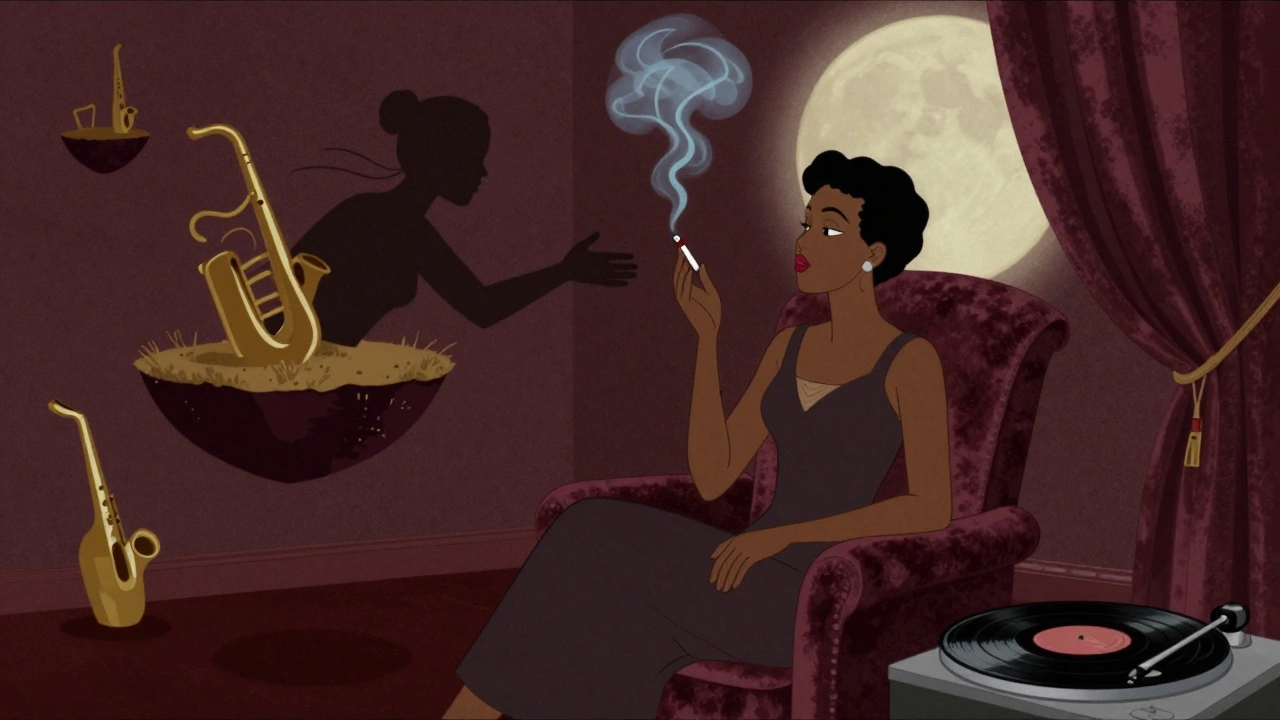
While Whitney filled arenas, Sade made bedrooms feel like private concerts. Her band, simply called Sade, didn’t chase charts. They chased mood. Their 1984 debut, Diamond Life, was a slow-burn masterpiece. No flashy production. No screaming choruses. Just smooth jazz, cool funk, and a voice that sounded like midnight in a velvet room.
‘Smooth Operator’ became the blueprint for a new kind of R&B-elegant, restrained, emotionally complex. At 120 BPM, it wasn’t a dance track. It was a seduction. Sade Adu didn’t shout. She didn’t belt. She whispered, and people leaned in. Her lyrics didn’t talk about heartbreak-they painted it. ‘Your love is like a shadow, always following me,’ she sang. And suddenly, love wasn’t just a feeling. It was a landscape.
She didn’t need radio spins to sell millions. Diamond Life went over four million copies worldwide. Critics called it the best debut of the decade. Robert Christgau ranked it #12 in his 1990 guide. And she never toured aggressively. Never did interviews. Never chased fame. That silence made her more powerful. She didn’t need to prove anything. Her music did it for her.
Anita Baker: The Soul That Spoke in Chords
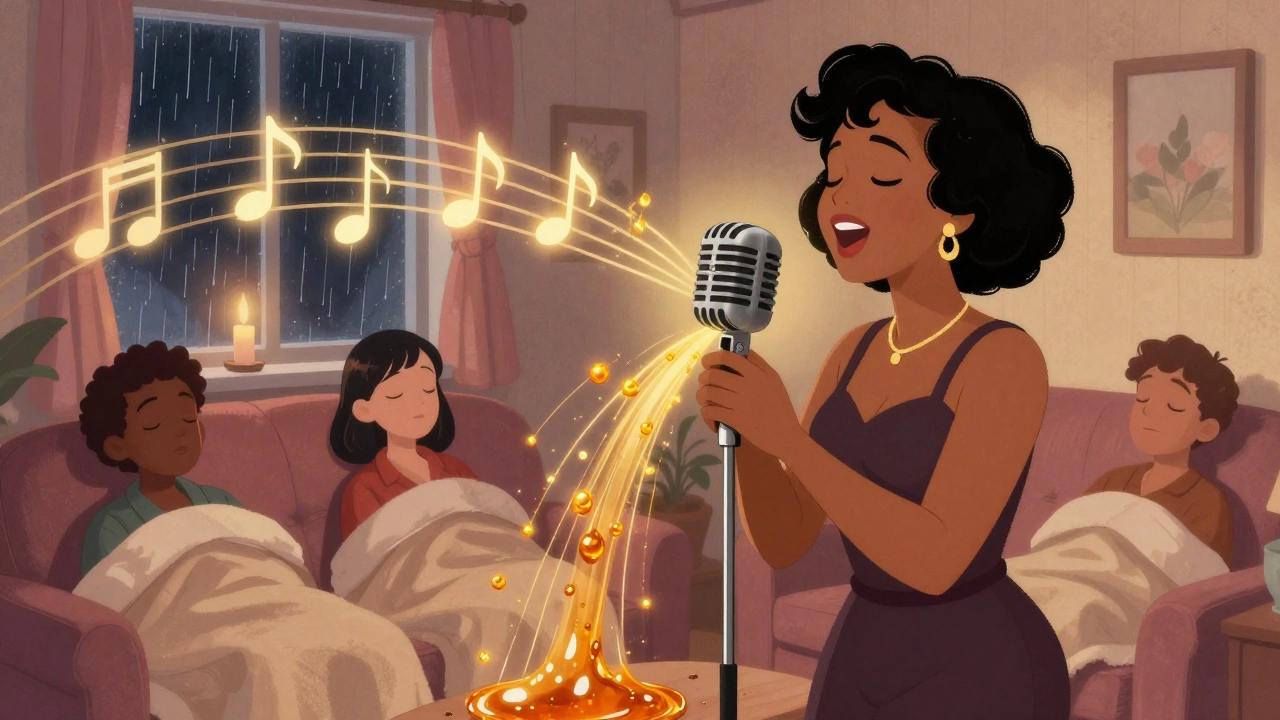
If Whitney was the storm, and Sade was the calm, Anita Baker was the quiet after the rain. Her 1986 album Rapture didn’t just sell-it became a lifeline. Over eight million copies. Two Grammys. A new sound: ‘sophisticated soul.’ She didn’t sing to impress. She sang to heal.
Her voice? A rich, deep contralto that felt like warm honey poured over your bones. Songs like ‘Sweet Love’ and ‘Caught Up in the Rapture’ didn’t use simple chords. They used 7ths, 9ths, suspended notes-the kind you hear in jazz clubs, not on Top 40 radio. And that’s what made her revolutionary. She brought complexity to mainstream R&B without losing emotion.
Her label, Elektra, spent just $200,000 to promote Rapture. No big ads. No TV spots. Just radio. And somehow, it sold 300,000 copies in six months without any major push. Urban contemporary stations started playing her songs back-to-back. The ‘quiet storm’ format-designed for late-night, candlelit listening-exploded from 42 stations in 1985 to nearly 200 by 1990. Program directors said it wasn’t just demand. It was necessity. People needed something real.
Even today, fans say her voice still gives them chills. A Reddit thread from 2023 comparing her vocal technique to Whitney’s had over 1,800 upvotes. One listener wrote: ‘Anita doesn’t sing notes. She sings feelings.’
Their Differences, Their Power
They weren’t rivals. They were different sides of the same coin.
- Whitney Houston gave you power. Her voice was a weapon-clear, loud, flawless.
- Sade gave you mystery. Her music didn’t explain-it invited you to sit still and feel.
- Anita Baker gave you intimacy. Her songs felt like letters you never sent, but always needed to hear.
Commercially, Whitney dominated. She had 11 No. 1 hits. Sade never hit No. 1 on the Hot 100. Anita Baker had one. But sales don’t tell the whole story. Sade’s Diamond Life has a 4.2/5 rating on RateYourMusic. Anita’s Rapture? 4.5/5. Whitney’s debut? 3.8/5. Why? Critics and fans said her early work felt too polished. Too produced. Too perfect.
That’s the irony. Whitney’s perfection made her iconic. But it also made her seem distant. Sade and Anita made you feel close. Even when you were alone.
Their Legacy Lives in Every Note Today
Think about the R&B you hear now. SZA’s breathy phrasing? That’s Sade. H.E.R.’s tender delivery? That’s Anita Baker. Beyoncé’s vocal runs? That’s Whitney, passed down like a torch.
When H.E.R. won a Grammy in 2021, she said, ‘I’m here because Anita Baker sang ‘Sweet Love’ and made me believe I could be soft and strong at the same time.’
Beyoncé’s 2022 album Renaissance has 17 direct lyrical nods to Whitney’s catalog. And when Sade was inducted into the Rock & Roll Hall of Fame in 2024, Questlove said: ‘These women created the sonic blueprint for contemporary R&B. You hear them in SZA. In Victoria Monét. In every artist who dares to be quiet before they explode.’
Even now, in 2026, Whitney Houston’s catalog brings in $14.3 million in streaming revenue. Sade’s music has over 1.2 billion streams. Anita Baker? 8.7 million monthly listeners. Not bad for artists who never needed to chase trends.
They didn’t follow the crowd. They became the crowd. And decades later, we’re still listening.
Why did Whitney Houston’s voice stand out so much in the 1980s?
Whitney Houston’s voice stood out because of her technical precision and emotional power. She had a three-octave range, flawless pitch control, and a gospel-influenced melisma that made even simple songs feel epic. Billboard noted her recording of ‘Saving All My Love for You’ took only three takes-a sign of her unmatched consistency. No one else in pop or R&B could match her ability to blend raw emotion with technical perfection.
How did Sade influence modern R&B without ever hitting No. 1 on the charts?
Sade didn’t need chart-toppers to change music. She redefined R&B by stripping it down-using jazz harmonies, minimalist production, and a whisper-soft vocal style that made silence feel powerful. Her album Diamond Life sold over 4 million copies and earned a Grammy. Her influence is in the mood, not the numbers. Artists like H.E.R., Jorja Smith, and even Beyoncé borrow her restraint, her calm, her emotional depth. She proved you could be massive without being loud.
Why is Anita Baker’s ‘Rapture’ considered a turning point in R&B history?
Anita Baker’s Rapture was a turning point because it brought jazz complexity into mainstream R&B. While most 1980s soul relied on simple chords and big drums, Baker used 7ths and 9ths, creating a sound that felt intimate, not commercial. It sold over 8 million copies without heavy promotion. Radio stations created the ‘quiet storm’ format just to play her songs. She made adult R&B feel dignified, not diluted. Critics called it the most emotionally honest R&B album of the decade.
Did these artists influence each other, or were they completely different?
They didn’t influence each other directly-they carved separate paths. Whitney was the powerhouse, Sade the minimalist poet, Anita the soulful jazz匠. But together, they showed R&B could be pop, jazz, quiet, loud, polished, or raw. They didn’t compete. They expanded the genre. Today’s artists don’t choose between them-they combine all three styles. That’s their real legacy: proving R&B had room for every kind of truth.
Why do fans still stream and discuss these artists so much in 2026?
Because their music doesn’t age. Whitney’s vocals are timeless. Sade’s mood is eternal. Anita’s honesty cuts through every generation. Streaming numbers prove it: Whitney’s catalog earned $14.3 million in 2025. Sade has over 1.2 billion streams. Anita still has 8.7 million monthly listeners. Fans aren’t just nostalgic-they’re seeking something real. These artists didn’t sing about fame. They sang about love, pain, and quiet strength. That’s why we still need them.


